
Band Exercises For Stronger Running and Lifting

When life stays busy with training, kids, and everyday stress, it is easy to overlook simple tools that keep your body strong and resilient. Band exercises for stronger running and lifting give you a low impact way to build muscle, protect your joints, and support your core without needing a full gym setup. As a Sports PT at Revival Physical Therapy & Wellness, we use resistance bands every day to help runners, CrossFit athletes, and postpartum moms move with more control and confidence. With the right plan, bands help you fine tune form, target weak spots, and progress safely so you can stay active instead of stopping the activities you love.
How Resistance Band Training Supports Strong, Pain Free Movement
When you train with bands, you build strength and control without beating up your joints. Your muscles get the challenge they need while your knees, hips, back, and pelvic floor receive a break from heavy impact or load. From a Sports PT perspective, bands help you feel how your body should move instead of guessing. You can slow things down, groove better patterns, and then bring that control into your running, lifting, or postpartum workouts.
The Sports PT Advantage More Than Just “Stretching With Bands”
Many people think of bands as warm up tools or something to grab when lifting heavy is not possible. In the clinic, I use them as precise strength and control tools. Bands are helpful because they:
- Increase resistance as you move through the range, so your muscles work hardest where they should
- Provide feedback on alignment and control
- Train the small stabilizers that keep your joints safe
- Allow you to adjust difficulty quickly without changing equipment
In Sports PT, we use bands to:
- Build glute and hip strength for better running and lifting
- Support shoulder stability for pressing, pulling, and overhead work
- Teach clean movement patterns before we load them heavier
- Transition you from early rehab back to your preferred workouts
You are not just doing casual band work. You are training your body to move well under pressure.
Why Bands Work For Runners and Lifters
If you run, lift, or chase kids around Minneapolis, your body handles a lot of load. Bands provide a way to train hard without always going heavy or high impact. For runners, bands help:
- Strengthen glutes to support hips and knees
- Improve single leg control for every step of your stride
- Keep ankles and feet strong for uneven terrain and longer miles
For lifters and CrossFit athletes, bands help:
- Build strength at weaker parts of a lift
- Train shoulder and hip stability for safer barbell work
- Add variety that reduces overuse and burnout
For postpartum athletes, bands help:
- Rebuild deep core and hip strength without overwhelming your pelvic floor
- Provide gentle, progressive resistance as you return to running or lifting
- Support better posture when you feed, carry, and lift your baby
The result is a very efficient way to create more resilient movement with very simple equipment.
When To Use Band Exercises And When To Be Cautious
Band work fits into many seasons of your training and recovery. The key is knowing when it helps and when extra guidance is smart. Band exercises are usually great when you:
- Feel stiff or off before a run or workout
- Return from an injury and need to rebuild gradually
- Want to target weak links like hips, glutes, or shoulders
- Travel or train at home and need simple, compact tools
- Are postpartum and need gentle, controllable strength work
Be more cautious and consider a PT assessment if you:
- Feel sharp, sudden, or worsening pain with any exercise
- Notice knee collapse or difficulty controlling movements, even with light bands
- Have pelvic heaviness, bulging, or leaking with effort
- See abdominal doming or feel pressure in your core during band work
- Experience pain that lingers instead of easing within twenty four hours
Band work should feel challenging but controlled. If every rep feels like a struggle to control, it is time to adjust the plan or resistance.
Best Band Exercises For Stronger Running: Glute Activation To Support Your Stride
Your glutes are your power engines for running. When they do not activate well, your knees and lower back often become irritated. Two very effective band moves for runners include lateral walks and standing hip work. These exercises wake up your glutes and teach your hips to stabilize each step.
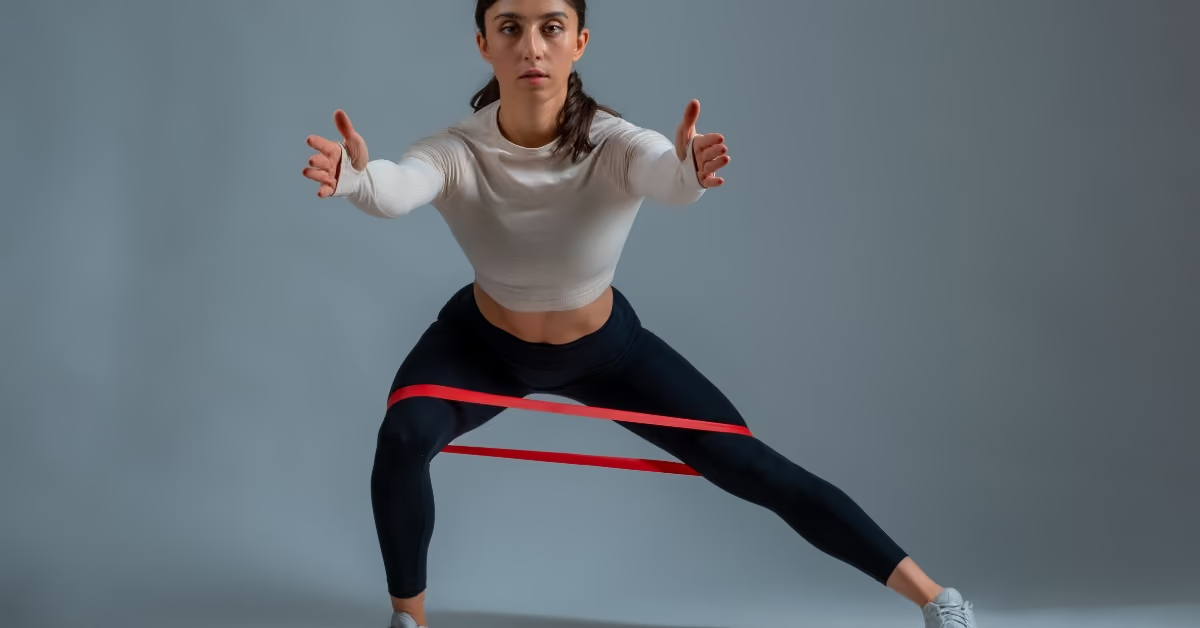
Lateral Band Walks Or Monster Walks:
- Place a loop band around your legs, just above your knees or around your ankles
- Bend your knees slightly and keep your chest tall
- Step sideways, keeping steady tension on the band
- Take 10 to 15 slow, controlled steps each way
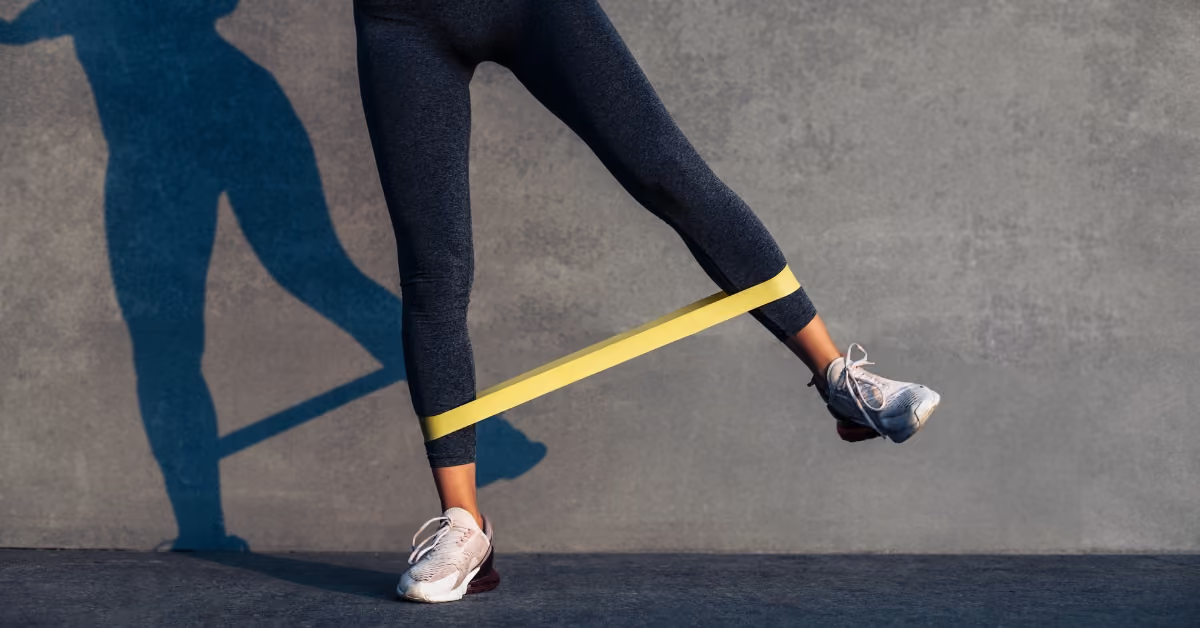
Standing Hip Abduction With Band:
- Loop a band around your ankles
- Stand tall on one leg and hold a wall or counter for balance if needed
- Gently move the other leg out to the side without leaning your trunk
- Control it back in, then repeat 10 to 15 times per side
You should feel strong work in your glutes, not strain in your low back.
Band Drills For Better Knee And Ankle Alignment
Good running form starts with solid support at your ankles and knees. Bands help you train clean alignment so you do not need to overthink every step on the trail or treadmill.
Banded Squats For Knee Tracking:
- Loop a band above your knees
- Stand with feet about hip or shoulder width apart
- As you squat, gently press your knees out into the band
- Keep your feet grounded and your chest tall
- Perform 10 to 15 reps with slow, steady control
This helps your knees track over your toes instead of collapsing inward.
Ankle Inversion And Eversion With Band:
- Sit with your leg straight and loop a band around your forefoot
- Hold the band to the inside or outside to create resistance
- Slowly move your foot in and out against the band
- Keep the movement controlled and avoid using your whole leg
- Complete 15 to 20 reps each direction per side
This strengthens the small ankle muscles that protect you from sprains and common overuse issues.
Core And Hip Stability For Hills And Longer Miles
A strong core and steady hips help you hold form when fatigue sets in. Bands make that work more specific and more effective.
Core Press With Band:
- Anchor a long band at chest height
- Stand sideways to the anchor and hold the band with both hands at your chest
- Step out until you feel firm tension
- Press your hands straight out in front of you and hold for two to three seconds
- Keep your chest and hips facing forward
- Perform 8 to 12 reps per side
This trains your core to resist rotation, which is exactly what it does with each step.
Dead Bug With Band:
- Lie on your back with a band around your feet
- Bring your legs to a tabletop position and brace your core
- Slowly extend one leg out against the band while the other stays still
- Bring it back in and repeat on the other side
- Perform 8 to 10 reps per side
Move slowly and keep your ribs down. The goal is strong work in your core, not gripping in your hip flexors.
Best Band Exercises For Stronger Lifting And CrossFit: Building Bulletproof Shoulders For Pressing And Pulling
Overhead lifts, pullups, and kipping movements demand a lot from your shoulders. Bands help you strengthen the small stabilizers that keep bigger moves safer.
Banded External Rotations:
- Anchor a band at elbow height
- Stand with your elbow bent to 90 degrees, tucked by your side
- Rotate your forearm out against the band, then slowly return
- Keep your elbow close to your body
- Perform 12 to 15 reps per side
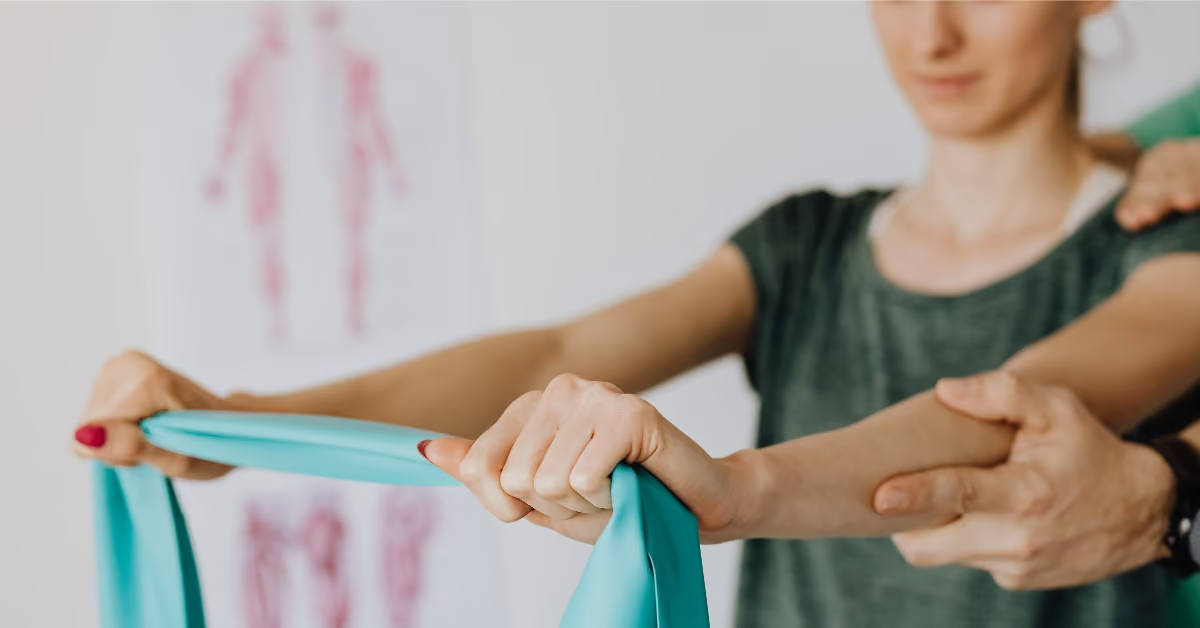
Banded Pull Apart Or Face Pull:
For pull apart work:
- Hold a band in front of you at shoulder height
- Pull the band apart by squeezing your shoulder blades together
- Keep your shoulders relaxed and away from your ears
- Complete 12 to 15 reps
For face pulls:
- Anchor a band at about face height
- Hold the band with both hands and step back to create tension
- Pull the band toward your face, leading with your elbows
- Squeeze between your shoulder blades at the end of the motion
- Perform 10 to 12 reps
These drills pair well with any pressing or pulling day as part of a warm up.
Glute And Hip Power For Squats And Deadlifts
If your hips and glutes fail to carry their share of the load, your back and knees often suffer. Band work helps you train strong hip drive without heavy weights every session.
Banded Hip Thrusts Or Glute Bridges:
- Lie on your back with a band just above your knees
- Place your feet flat and hip width apart
- Press your knees gently out into the band and lift your hips
- Squeeze your glutes at the top and lower with control
- Perform 12 to 15 reps
To progress, you can place your upper back on a bench for a larger range.

Banded Romanian Deadlift Patterning:
- Loop a long band under your feet and hold the ends in your hands
- Stand tall, then push your hips back while keeping a slight knee bend
- Keep your back flat and chest proud
- Drive through your heels to return to standing
- Perform 8 to 12 slow reps
You should notice strong effort in your hamstrings and glutes, not discomfort in your low back.
Using Bands For Warm Ups And Accessory Work In The Gym
Bands offer an easy way to prepare your body before you touch a barbell. They also make excellent accessory work to support your main strength training. Consider these options:
- Add 5 to 10 minutes of band work before lifting to wake up glutes, shoulders, and core
- Use lighter bands between heavy sets to keep good movement patterns sharp
- Replace one heavy day with a lighter band and body weight day when you feel drained
- Use bands on travel days so you maintain strength and coordination
Think of band work as support for your big lifts. It helps your joints stay happier and your technique more consistent.
How Often To Do Band Work For Results
Progress with band work comes from consistency rather than marathon sessions. Small, regular amounts of focused exercise can create meaningful change in strength and control. A simple guideline: For runners:
- Use 2 to 3 band exercises before most runs for activation
- Add 1 to 2 short strength sessions per week with glute, core, and calf focus
For lifters and CrossFit athletes:
- Use bands for 5 to 10 minutes before upper and lower body days
- Add 2 to 3 band accessory movements at the end of 2 sessions per week
You can build from this base as your body adapts, your symptoms improve, and your energy allows.
Common Form Mistakes Sports PTs See And Quick Fixes
Most people do not need harder bands, they need better form and awareness. Small adjustments can turn an average exercise into a very effective one. Common issues include:
- Allowing the band to control the movement instead of guiding it
- Using momentum or speed instead of steady muscle work
- Letting knees collapse in during squats, lunges, or bridges
- Arching the low back during core work
- Holding the breath on every rep
Quick fixes include:
- Slowing down and focusing on a smooth, even tempo
- Keeping light tension on the band through the full motion
- Thinking ribs down and spine long during core and lower body work
- Matching your breath to your effort and avoiding constant breath holding
When you clean up your form, the same simple band exercise can suddenly feel much more powerful and targeted.

How Revival Physical Therapy & Wellness Can Support Your Active Life
You work hard to stay active, and your body deserves support that matches that effort. At Revival Physical Therapy & Wellness, we use band exercises as one part of a whole person, root cause approach so you can feel strong, confident, and capable in real life. One On One Sports PT For Runners, CrossFit Athletes, And Active Adults If you love running, lifting, or group fitness, you need more than generic rehab. You need a plan that respects your goals and helps you stay moving during recovery. We look at how you move, not just where you hurt. That means we use band work, strength training, and movement coaching to help you:
- Run with better form and less pain
- Lift with more power and confidence
- Train smart between races, events, or busy seasons of life
You continue to live an active life, and we guide the process so your body can keep up.
Serving Active Adults In Minneapolis, Golden Valley, And Plymouth
If you live or train in the Twin Cities, you have access to personalized, one on one care with a Doctor of Physical Therapy. We keep our sessions focused and unrushed so you receive real answers and a clear plan. Whether you are dealing with knee pain on the trails, shoulder pain at the barbell, or pelvic floor symptoms after birth, we meet you where you are. Then we build a path forward that fits your life in Minneapolis, Golden Valley, or Plymouth.
Ready To Make Band Exercises Work For You?
If you want expert eyes on your movement and a plan that uses band exercises in the right way for your body, we are here to help. You can start with a free 15 minute discovery consultation for new patients to talk through your goals, concerns, and next steps. Call Revival Physical Therapy & Wellness at 612 605 7594 to schedule your consult and begin building a stronger, more confident way to move.