
IASTM for Tendonitis: How Athletes Can Reduce Pain and Get Back to Training Faster

You train hard, so when tendon pain lingers, and every run, workout, or lift feels sharp and stiff, it can feel frustrating and confusing.IASTM for tendonitis gives you another tool to calm that irritation, improve how your tissue moves, and help you get back to training with more confidence.At Revival Physical Therapy & Wellness, we see active adults and athletes across Minneapolis, Golden Valley, and Plymouth who feel stuck in a cycle of rest, flare-up, and repeat.In this blog, we walk through what IASTM actually is, how it works on irritated tendons, and how it fits into a smart rehab plan so you can keep moving instead of sitting on the sidelines.
Understanding IASTM For Tendonitis In Active Adults And Athletes
What Is IASTM And How Does It Work
IASTM stands for Instrument Assisted Soft Tissue Mobilization. It uses smooth, specially shaped tools to help a trained provider treat irritated muscles, tendons, and fascia.Instead of only using hands, the therapist glides the tools along your skin with controlled pressure. This helps them feel small restrictions or sticky spots that can be hard to pick up with fingers alone.The tools often have different edges and curves that match the shape of different body parts. A therapist might use one tool on your Achilles tendon, and a different one around your knee or elbow.You do not need to scrape as hard as possible for IASTM to help. The goal is to create a targeted, specific stimulus that encourages your tissue and nervous system to respond, not to leave you bruised and sore for a week.
Tendonitis 101: Why Your Tendons Feel So Irritated
If you run, lift, or push your body regularly, your tendons handle a lot of force. They connect muscle to bone and act like springs that store and release energy with every stride, jump, and pull.Tendonitis usually shows up when the load on your tendon climbs faster than your body can adapt.That might look like:
- Jumping into a new training cycle without a base
- Adding hill sprints, plyometrics, or box jumps too fast
- Increasing volume and intensity at the same time
- Sitting all day, then going straight into heavy lifting
- Returning from a break and trying to match your old numbers
Common hot spots include:
- Achilles tendon in runners, jumpers, and field sport athletes
- Patellar tendon and quadriceps tendon in lifters, CrossFit athletes, volleyball, and basketball players
- Lateral elbow or tennis elbow in racquet sports, gripping sports, and barbell training
- Rotator cuff and biceps tendon in overhead lifting, swimming, throwing, and gymnastics
Rest alone often gives short-term relief, but it does not rebuild tendon strength.If you rest until it feels better, then jump right back into full training, the pain often returns because the tendon never got stronger.
The Science Behind IASTM For Tendonitis
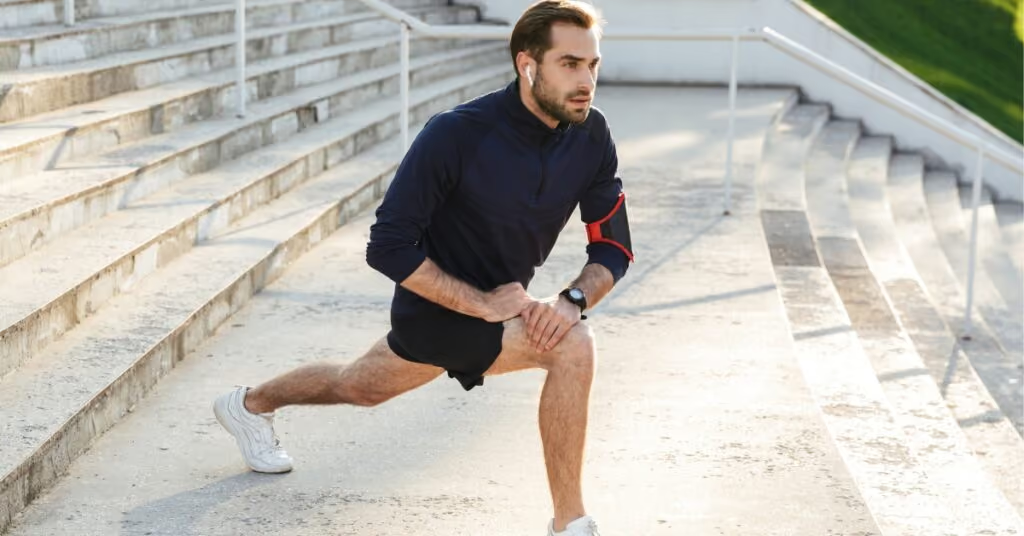
IASTM creates a mild, controlled mechanical load on the soft tissue under the tool. That pressure helps increase local blood flow and may stimulate fibroblasts, the cells that help maintain and repair connective tissue.Over time, this can support more organized collagen in the tendon and surrounding tissue. Fewer sticky spots and better tissue quality often mean smoother movement and less sharp pain when you load the area.IASTM also affects your nervous system. When the tool glides across your skin, it provides strong sensory input that can help your brain recalibrate how it perceives stiffness and pain in that region.Research suggests that IASTM can help with:
- Short-term pain relief
- Improved range of motion
- Better tolerance to movement and loading
The strongest results usually come when IASTM pairs with a smart strengthening and loading program. On its own, it is a helpful tool, not the entire solution.
Is IASTM Safe? Risks, Soreness, And Common Myths
Most active adults and athletes tolerate IASTM well when a trained provider uses it.You might feel some pressure, heat, or mild discomfort during the session, but it should stay within a tolerable and in control range.After a session, it is common to feel:
- Mild soreness that feels like a workout
- Temporary redness in the treated area
- Slight sensitivity that fades within a day or two
Light redness does not mean the treatment works better. You do not need bruises or aggressive scraping to see progress, and heavy bruising can even slow your recovery.In some cases, a provider will avoid IASTM or modify it, such as:
- Suspected or confirmed fracture
- Open wounds or skin infections
- Active blood clots or certain circulation issues
- Certain medical conditions or medications that affect clotting
A skilled physical therapist will screen you and adjust the plan to keep things safe and effective.
How IASTM Helps Athletes Get Back To Training
Common Sports Injuries IASTM Can Help
IASTM can support recovery from many tendon-related issues that show up in active adults and athletes.It does not replace training changes or strength work, but it can help you move with less pain as you rebuild.Achilles tendonitis often shows up as pain at the back of the heel or lower calf, especially in runners and jumpers. IASTM can help address stiffness in the calf and surrounding tissues so the tendon moves and glides more freely.With patellar tendonitis or jumper's knee, the front of your knee hurts during squats, jumps, or landings. IASTM around the quadriceps, patellar tendon, and surrounding fascia can reduce unwanted tension and improve how the knee bends and loads.With tennis elbow and other grip-related tendon pain, the outside of the elbow or forearm feels sore with gripping, pulling, or lifting.IASTM allows a therapist to work along the forearm muscles, the common extensor tendon, and even up into the upper arm and shoulder if those areas contribute to overload.For shoulder and rotator cuff tendon pain, overhead motions like presses, snatches, pull-ups, and swimming strokes can feel pinchy or unstable.IASTM around the rotator cuff, biceps tendon, chest muscles, and upper back can help restore smoother motion and reduce that catching feeling.You do not have to figure all of this out alone or settle for just resting and seeing what happens.If you want to understand your tendon pain, use IASTM effectively, and follow a plan that fits your sport and schedule, we are here to support you.We offer a free 15-minute discovery consultation for new patients so you can share your story, ask questions, and see if we are a good fit without any pressure. Call Revival Physical Therapy at 612 605 7594 to schedule your free discovery call and take the next step toward moving, training, and competing with confidence again.
What An IASTM Session Actually Looks Like
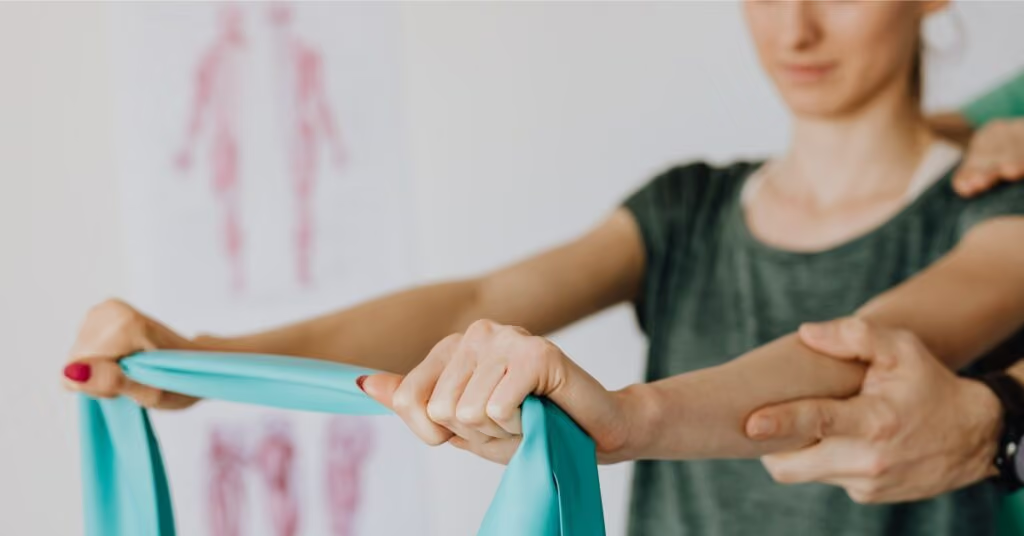
An IASTM session should feel structured and intentional, not random scraping. First, a physical therapist asks about your training, symptoms, and goals so you both target what matters most to you.Then you move. You might squat, walk, hop, or perform sport-specific motions while the therapist watches how you load the painful area.During the IASTM portion, you lie or stand in a position that gives good access to the area.The therapist applies a small amount of lotion or cream, then uses the tools to glide along the skin with specific pressure and direction.You should feel comfortable sharing what feels like good pressure and what feels too sharp. The therapist can adjust the technique, tool, or area based on your feedback.Most sessions also include active work, such as:
- Targeted strengthening for the involved tendon
- Mobility drills for nearby joints
- Balance and control exercises
- Coaching on form for key lifts or running patterns
You leave with a clear plan for what to do between sessions, rather than guessing on your own.This combination of hands-on care and active work supports both short-term relief and long-term resilience.
IASTM Alone Is Not Enough: The Role Of Strength And Load Management
Tendons love load, but they need the right amount at the right time. IASTM can help calm things down and improve how tissue moves, but it does not replace the need for progressive strengthening.A strong tendon comes from consistent, gradual loading.That often includes:
- Isometric holds to settle pain and reintroduce tension
- Slow, controlled eccentrics to build capacity
- Heavy slow resistance exercises for long-term strength
- Plyometrics or sport-specific drills when you are ready
Load management plays a huge role here.That might involve:
- Adjusting weekly mileage or intensity for runners
- Modifying volume, depth, or frequency of squats and jumps
- Swapping certain lifts or movements while pain calms
- Planning training blocks so the tendon has time to adapt
IASTM fits into this plan as one of several tools.It can help you tolerate the exercises your tendon needs, and it can help your body move better as you progress.
How Long Until You Feel A Difference
Many people notice some change in pain or stiffness after the first few IASTM sessions. You might feel lighter, looser, or more mobile in the affected area.Lasting change usually takes longer, because tendons remodel slowly. A typical plan might involve consistent treatment and progressive loading over several weeks or months, depending on how long the issue has lingered and how intense your training looks.Signs that things are moving in the right direction include:
- Less morning stiffness or first-step pain
- Better tolerance for walking, stairs, or daily tasks
- Ability to train with fewer flare-ups
- Gradual increase in volume or intensity without a big setback
A physical therapist can help you adjust expectations based on your specific sport, schedule, and history.The goal is sustainable progress that lets you keep your active life, not quick relief that fades as soon as you ramp back up.
Moving Forward With IASTM And Tendonitis
How Revival Physical Therapy & Wellness Helps Active Adults And Athletes
When you deal with stubborn tendon pain, you deserve more than a quick scrape and a handout of generic exercises. At Revival Physical Therapy & Wellness, we use IASTM as one part of a complete, personalized plan that matches your body, your sport, and your goals.We take time to understand how you train, where you feel limited, and what you want to get back to without pain.Then we blend IASTM, targeted strength work, mobility, and load management so you can move better, not just feel better for a day.
Staying Active While You Heal
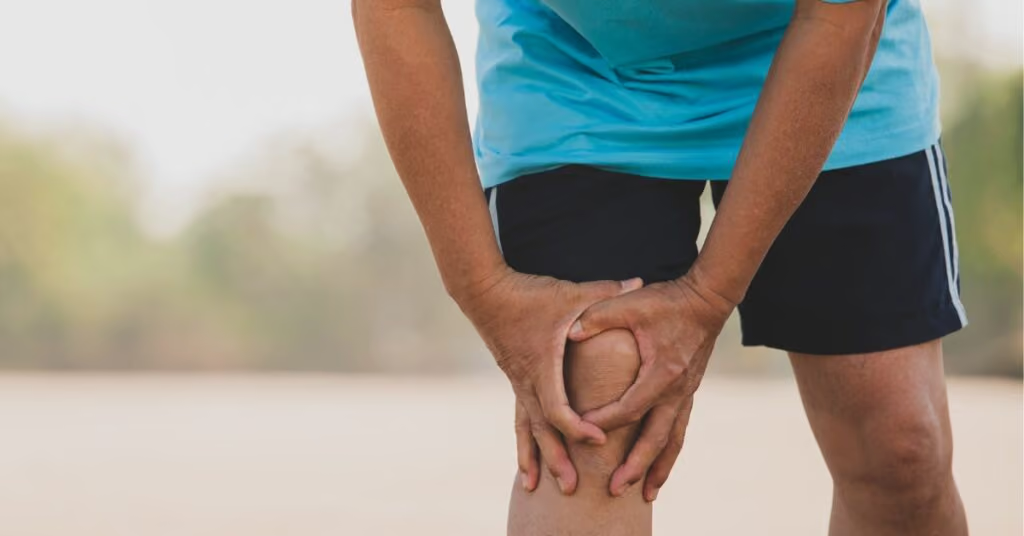
You work hard to stay active, and you should not have to stop everything unless it is truly necessary. We help you adjust and modify training so you keep moving in ways that support healing instead of fighting it.That might mean changing volume, intensity, or specific movements while tendon capacity builds. You stay engaged, stay consistent, and protect your long-term performance.
Support For Runners, Lifters, And Everyday Athletes In The Twin Cities
Whether you run around Minneapolis lakes, lift in a CrossFit gym in Golden Valley, or stay active with your family in Plymouth, you deserve care that understands your lifestyle.We work with runners, CrossFit athletes, lifters, and busy active adults who want a clear plan instead of guesswork.Sessions are one-on-one with a Doctor of Physical Therapy, so attention stays fully focused on you. Our goal is simple and specific, to help you feel strong, confident, and capable in the activities that matter most to you.
Ready To Tackle Tendonitis And Get Back To Training
You do not have to figure all of this out alone or settle for just resting and seeing what happens.If you want to understand your tendon pain, use IASTM effectively, and follow a plan that fits your sport and schedule, we are here to support you.We offer a free 15-minute discovery consultation for new patients so you can share your story, ask questions, and see if we are a good fit without any pressure.Call Revival Physical Therapy at 612 605 7594 to schedule your free discovery call and take the next step toward moving, training, and competing with confidence again.