
Why Ignoring Pain on Inner Side of Knee Sabotages Your Progress
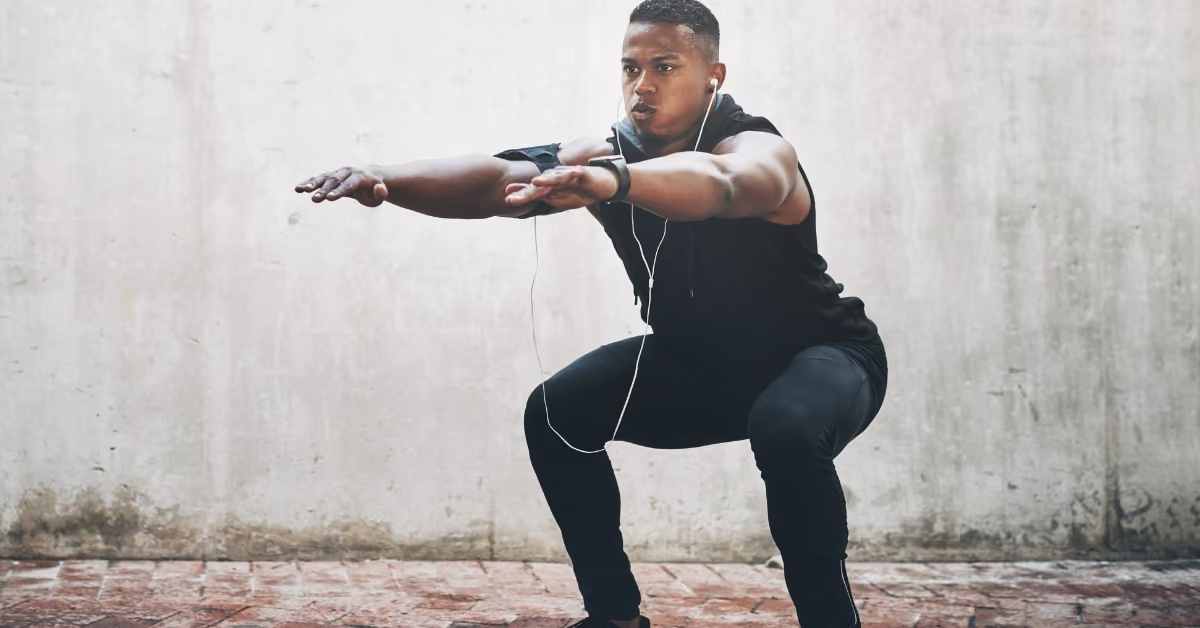
You finish your run and feel a sharp twinge. That nagging pain on inner side of knee flares up with every step.You might try to push through the discomfort. This often leads to a much more serious injury.Your body is alerting you to a mechanical issue. You cannot run off a structural problem.Common culprits for this specific pain include:
- Medial meniscus tears
- MCL sprains or stiffness
- Pes Anserine Bursitis
You need to address the root cause immediately. Ignoring it forces your body to compensate in dangerous ways.We want you to understand exactly what is happening inside your joint. Here is how you fix it for good.
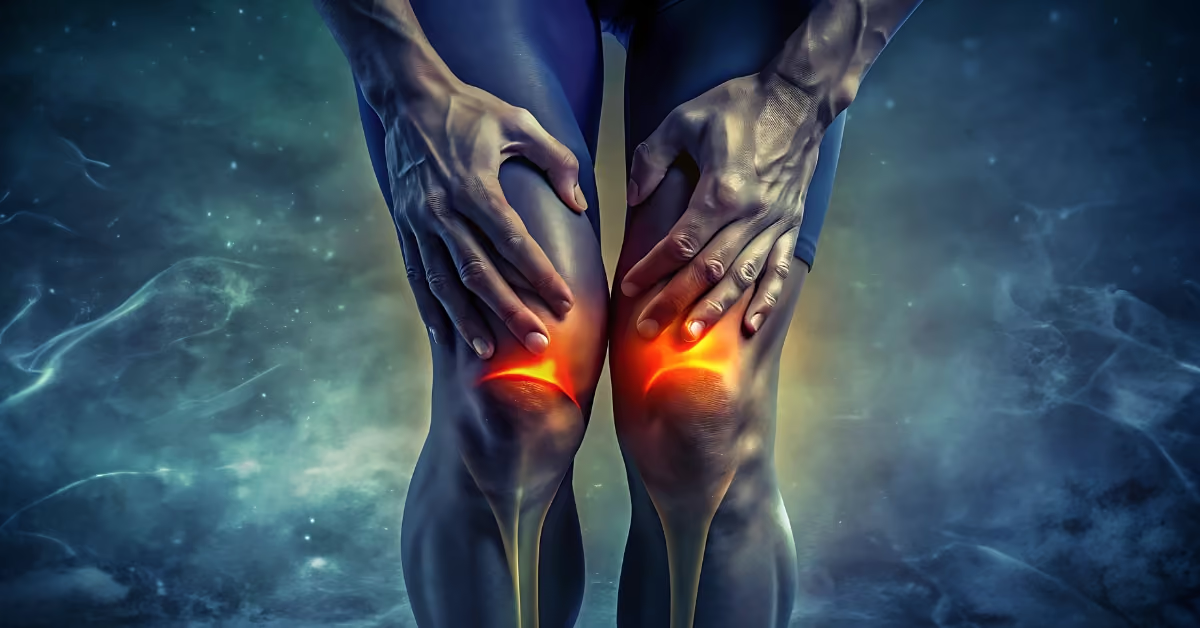
How to Fix Pain on Inner Side of Knee with Physical Therapy Exercises
You might feel that sharp sting after a long run around Lake Harriet. Perhaps your knee throbs after a rec league hockey game.Inner knee pain stops active people in their tracks. We see medial knee pain sideline hockey players and runners alike. We see this issue constantly in our Minneapolis clinic. You cannot ignore this warning signal from your knee joint.Inner knee pain suggests a mechanical breakdown. Rest alone rarely solves this mechanical problem. You need to address the specific muscle imbalances causing the stress. Here is how we treat inner knee pain with specific strengthening exercises.
1. Target the VMO to Stabilize the Knee Joint
A weak VMO muscle causes the thigh and shin bones to track poorly. This misalignment creates significant pain on the inside of the cap.This often mimics knee arthritis or even rheumatoid arthritis symptoms. You must strengthen this inner aspect of the quad.The Exercise: Perform Terminal Knee Extensions. Anchor a resistance band and loop it behind your affected leg.Straighten your leg fully against the resistance. Squeeze the inner leg muscles hard to support the medial compartment.
2. Protect the Medial Collateral Ligament (MCL)
The medial collateral ligament mcl stabilizes the inner knee. Poor hip strength forces the knee joints to collapse inward.This places massive stress on the ligament injuries. It is a common sports injury we see in soccer and football.The Exercise: Lie on your side to perform clamshells. This builds glute strength to prevent medial knee collapse.Keep your feet touching and lift the top knee. This reduces strain on the inner side of the joint.You do not have to let knee pain dictate your life. We help active adults in Minneapolis and St. Paul reclaim their movement.We have clinics conveniently located in Golden Valley and North Loop.Call us today to ask about pricing and availability at 612-605-7594.
3. Address Pes Anserine Bursitis
Three tendons attach to the shin bone at the pes anserinus area. Tightness here inflames the fluid filled sacs known as bursa.Pes anserine bursitis causes burning pain below the joint line. It is one of the most common knee injuries for runners.The Exercise: Gentle hamstring stretching helps reduce pain. Lie on your back and use a strap to pull your leg up.Stop if pain worsens or feels sharp. You want to relieve tension on the knee tendon.

4. Manage Medial Meniscus Tears
A medial meniscus tear often involves clicking or locking. You might feel this most when climbing stairs or squatting.Meniscus tears happen when the knee twists under load. This knee injury requires careful management to avoid surgical treatment.The Exercise: Mini-squats help build stability without aggravating the meniscus tear. Stand with feet shoulder-width apart.Bend your knees slightly while keeping your weight in your heels. Keep the knee called "tracking" over your toes.
5. Relieve Medial Plica Syndrome
Medial plica syndrome involves irritation of a thick band of tissue. It mimics other knee conditions like a meniscus injury.The medial plica snaps over the femoral condyle. This causes chronic pain that feels like a dull ache.The Exercise: Quad sets help reduce irritation. Sit with your leg straight and press the back of your knee down.Hold for five seconds to pump blood flow through the area. This helps reduce swelling effectively.
Stop Guessing and Start Healing Your Inner Knee
You cannot rely on generic advice to fix a specific mechanical problem. Rest and ice only mask the symptoms temporarily.You need a strategy that addresses why your knee failed in the first place. We provide the roadmap to get you back to full speed.
We Find the Real Source of Your Pain
Inner knee pain often acts as a warning light for other issues. Weak hips or stiff ankles usually force the knee to bear too much load.We take you through a comprehensive biomechanical assessment on day one. This process identifies the exact root cause of your discomfort.We explain the problem clearly without confusing medical jargon. You leave knowing exactly what we must do to fix it.
You Keep Your Active Lifestyle
Most providers tell you to stop running or lifting. We know that advice destroys your mental and physical health.We build a treatment plan tailored to your specific goals. We modify your activities so you can continue training safely.Our team helps you navigate recovery without losing your hard-earned fitness. We want you moving, not sitting.

We Build Long-Term Resilience
Eliminating the pain is only the first step of our process. We shift our focus to optimizing your physical health for the future.We provide preventive strategies to keep your knees bulletproof. You learn how to maintain these results on your own.You deserve to trust your body during every run and squat. We ensure you stay at peak performance for years to come.
Ready to Run Pain-Free?
You do not have to let knee pain dictate your life. We help active adults in Minneapolis and St. Paul reclaim their movement.We have clinics conveniently located in Golden Valley and North Loop.Call us today to ask about pricing and availability at 612-605-7594.